MKT Hub / DQEF Studio
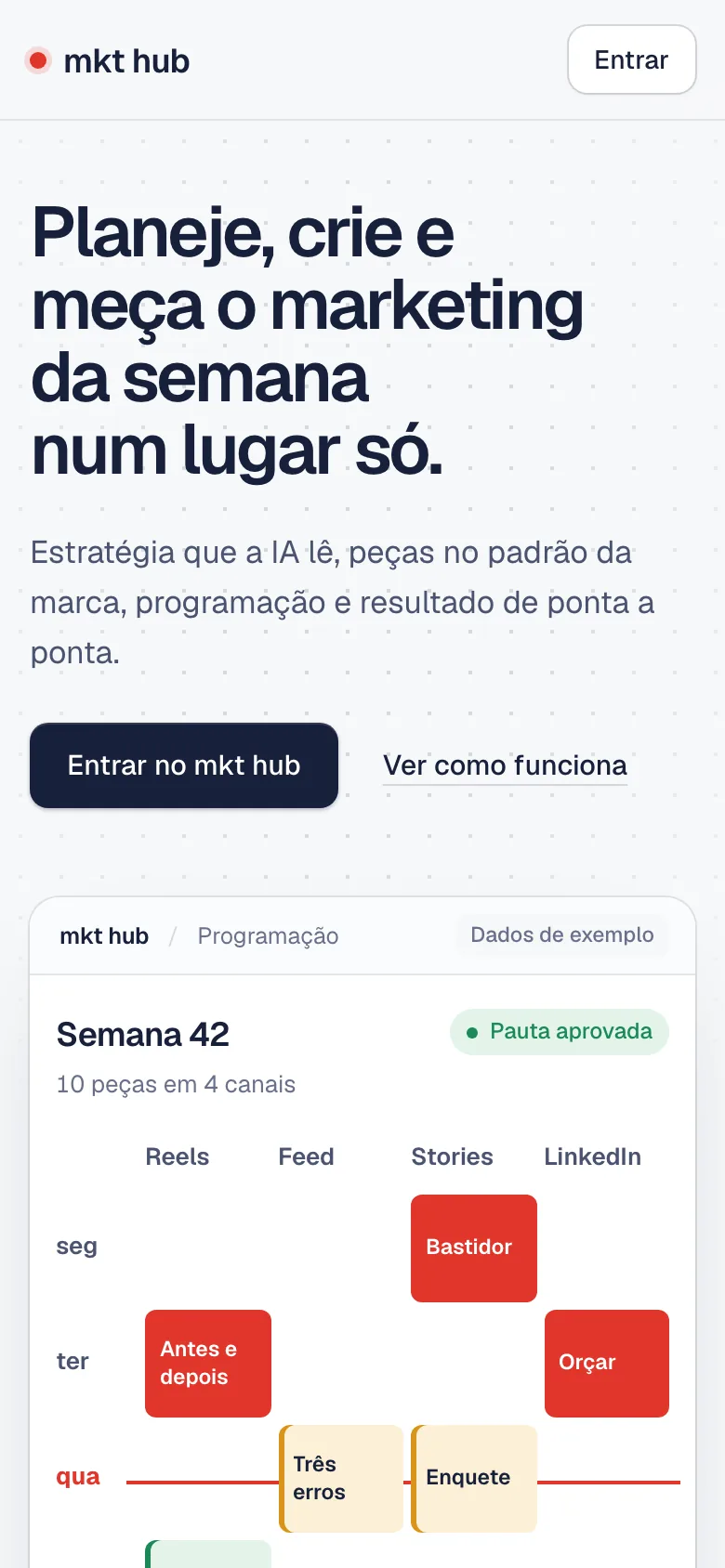
An AI marketing workspace that plans, produces and measures a brand's weekly content in one place.
- Role
- Product lead and full-stack builder
- Year
- 2026
- Stack
- React 19, TypeScript, Vite, Tailwind CSS 4, TanStack Query, Supabase (Postgres, Auth, Edge Functions, pgvector), Cloudflare Pages, Cloudflare Workers / R2 / Stream / Queues / Containers, OpenRouter (Claude, Flux), Gemini, Meta Graph API, GA4 / Google Ads APIs
mkt-hub.com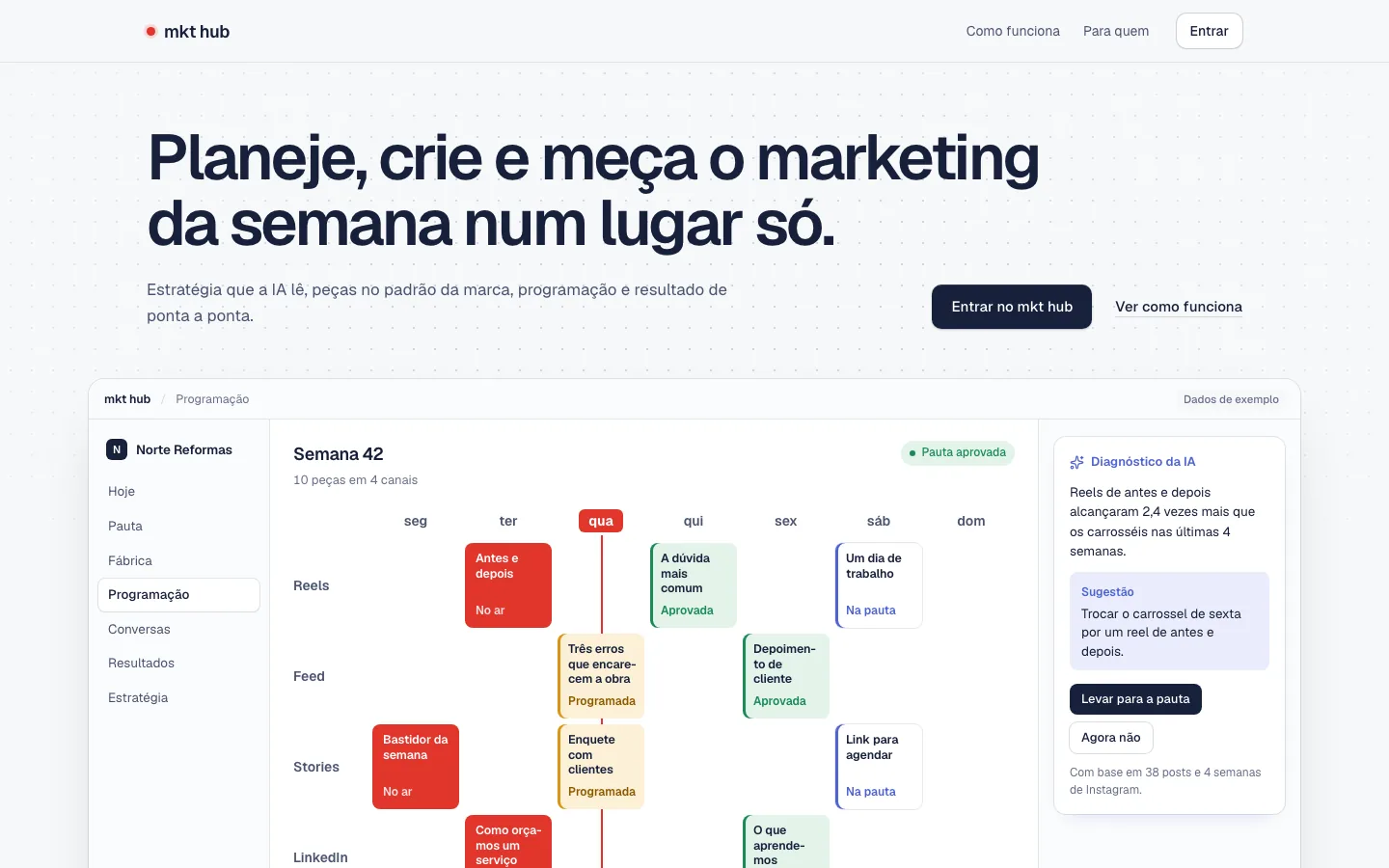
The problem
DQEF's marketing ran across Drive folders, spreadsheets, ad dashboards and one-off AI prompts. Assets were regenerated instead of reused, brand rules lived in people's heads, and performance data never fed back into the next brief.
What I built
A single workspace built around one loop: brief or insight, match existing assets, create (reuse first, generate only what is missing), human review, schedule, then read performance as the next insight. Every AI call goes through a task router with fallbacks and cost logging, the brand playbook is injected into every prompt, and nothing is published without a person approving it.
Highlights
- About 50 Supabase Edge Functions (AI router, caption and carousel generation, Gemini image/video classification, embeddings and asset matching, Meta/GA4/Google Ads/Instagram sync) on 88 SQL migrations with row-level tenant isolation.
- Three Cloudflare Workers: a media API on R2 + Stream + Queues + Workers AI for tagging, an HTML-to-video composer running on Cloudflare Containers, and an Instagram scheduler.
- Library-first creation: semantic asset matching (pgvector) runs before any new image is generated; a batch 'Factory' lets agents draft a week of posts that a person approves piece by piece.
mkt-hub.com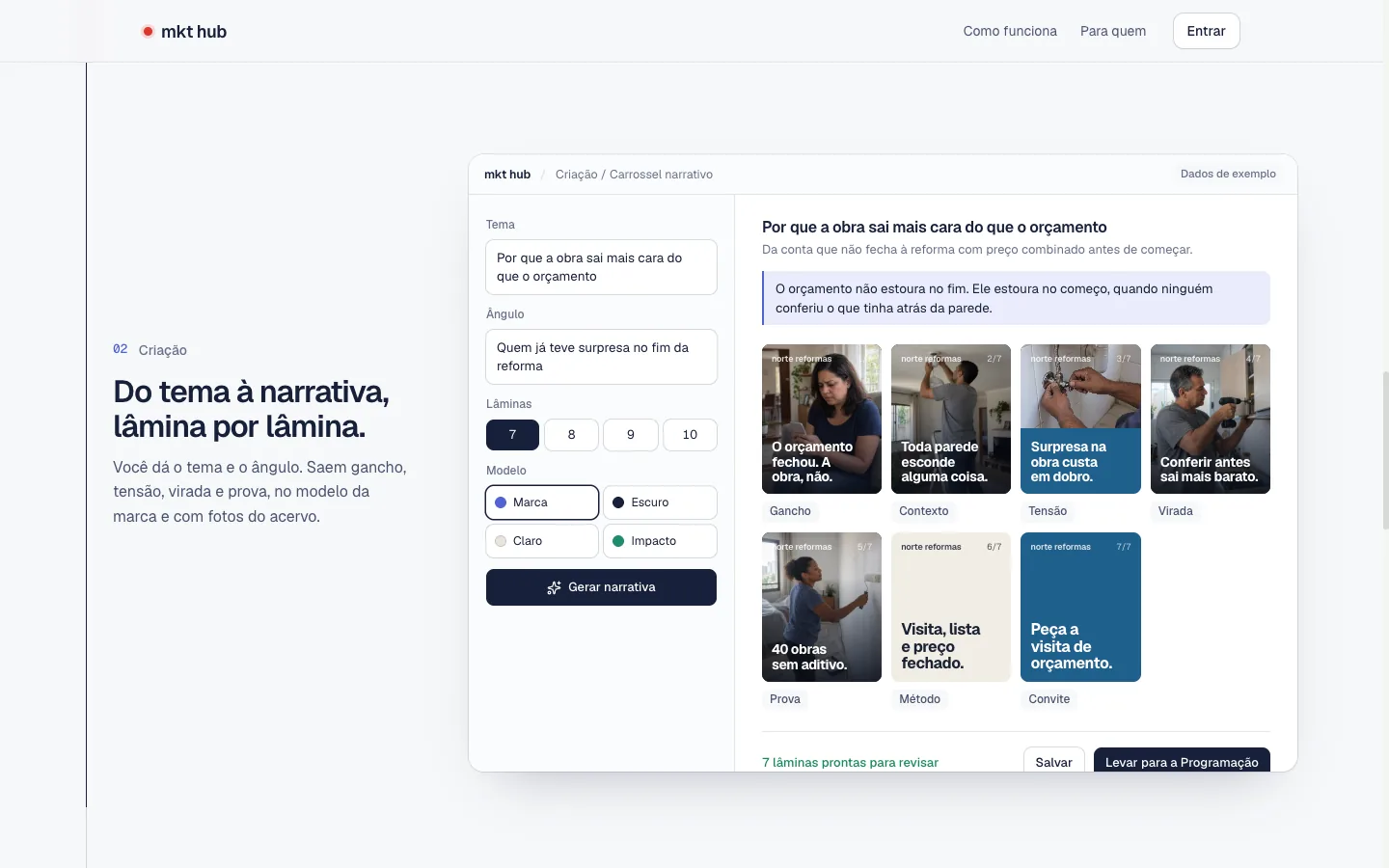
mkt-hub.com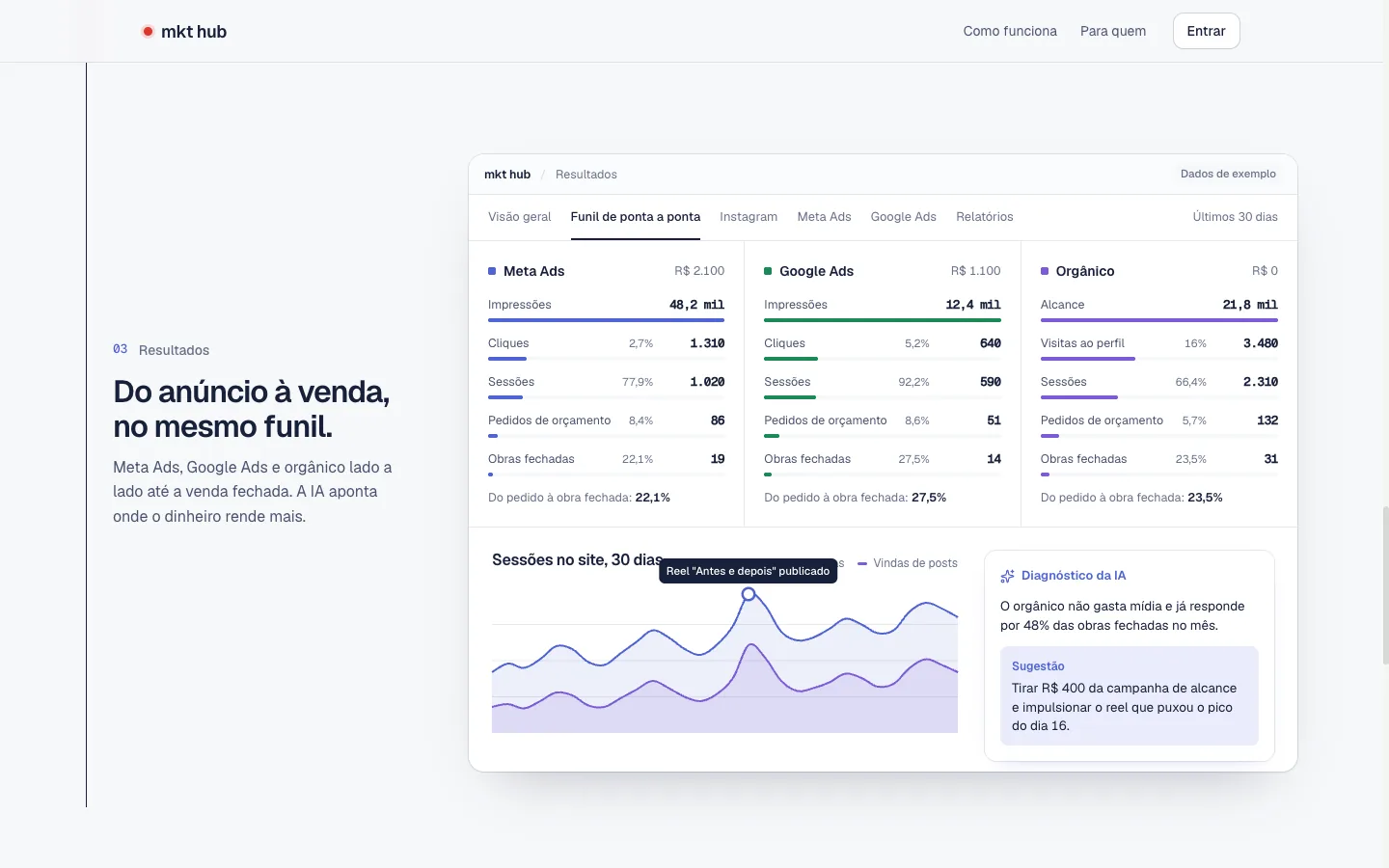
mkt-hub.com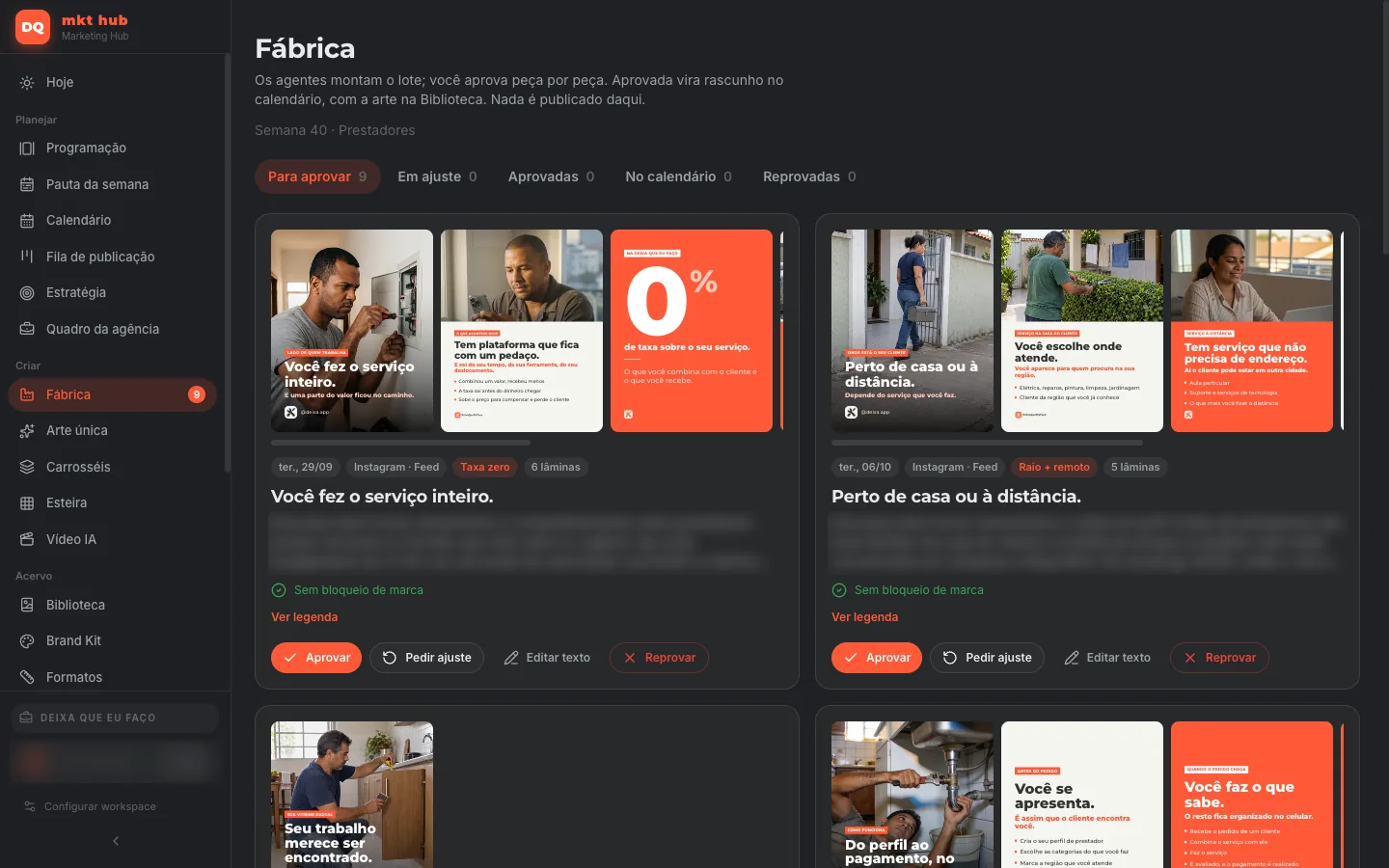
mkt-hub.com